Where Concrete Slabs Get Used
Most residential slab projects fall into a few clear categories. Each one asks something different from the pour, so the right build shifts with the job.
Garage Floors
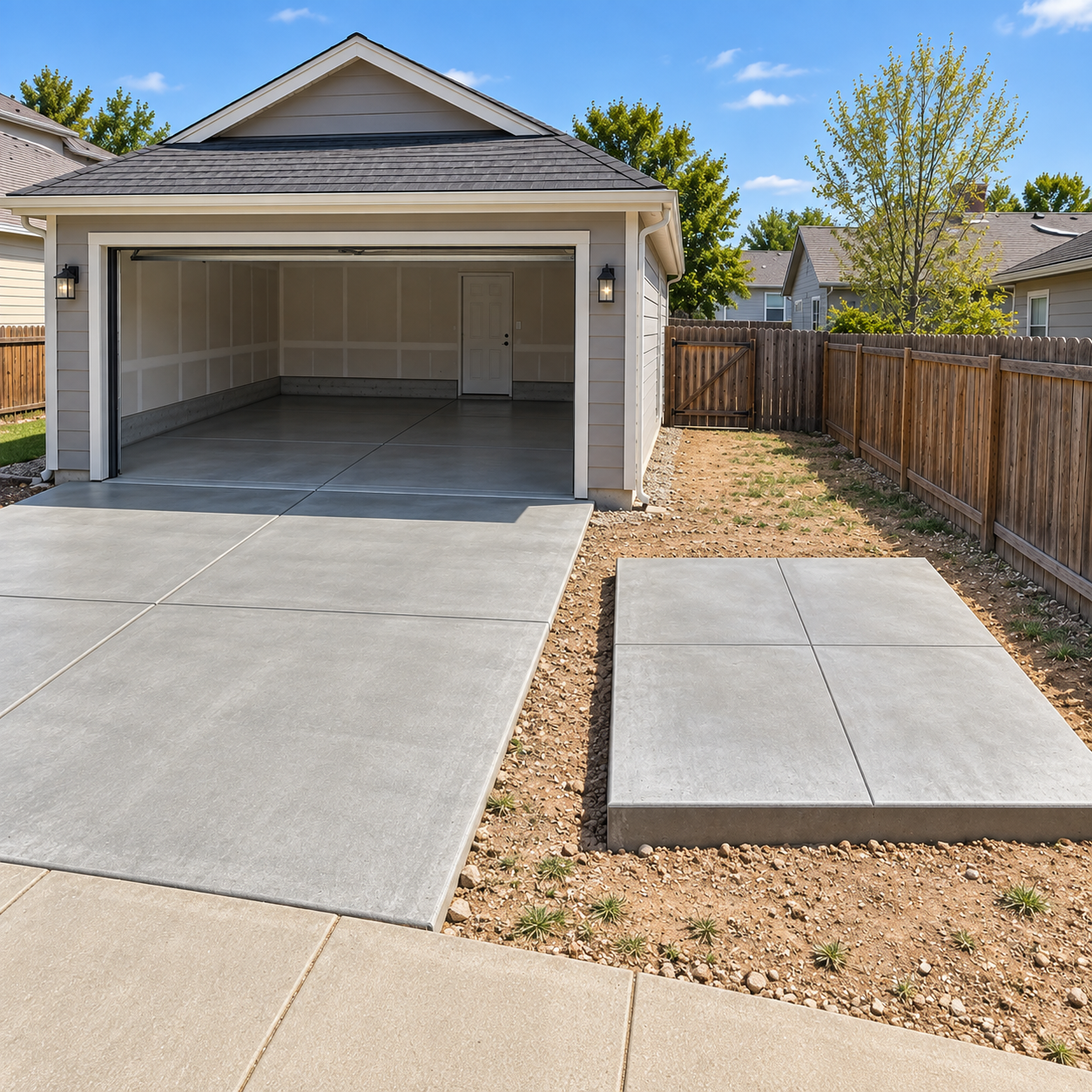
Garage slabs carry vehicles, tools, and steady daily wear. They need real thickness and reinforcement to handle rolling loads without cracking, plus a slight slope so water drains toward the door. This is the most demanding slab most homeowners will ever order.
Shed and Outbuilding Pads
A shed pad gives a storage building a clean, level, dry base and keeps it up off bare dirt. The loads are light, so footprint and grading matter more than raw strength. Getting the size and drainage right is most of the work.
Additions and Equipment Pads
An addition needs a level, reinforced slab that a new room can build on, tying into your existing structure where accuracy really counts. Equipment pads for HVAC units, generators, and hot tubs are smaller, but weight and vibration still make a stable, well-sloped base essential.
How Thick Should Your Slab Be
Thickness is the question we hear most, and the answer depends on the load. Build too thin and it fails early. Build heavier than you need and you pay for concrete that does nothing. The trick is matching the slab to how it will actually be used.
Light-Duty Slabs at 4 Inches
Four inches is the standard for lighter jobs. It suits:
- Shed and storage building floors
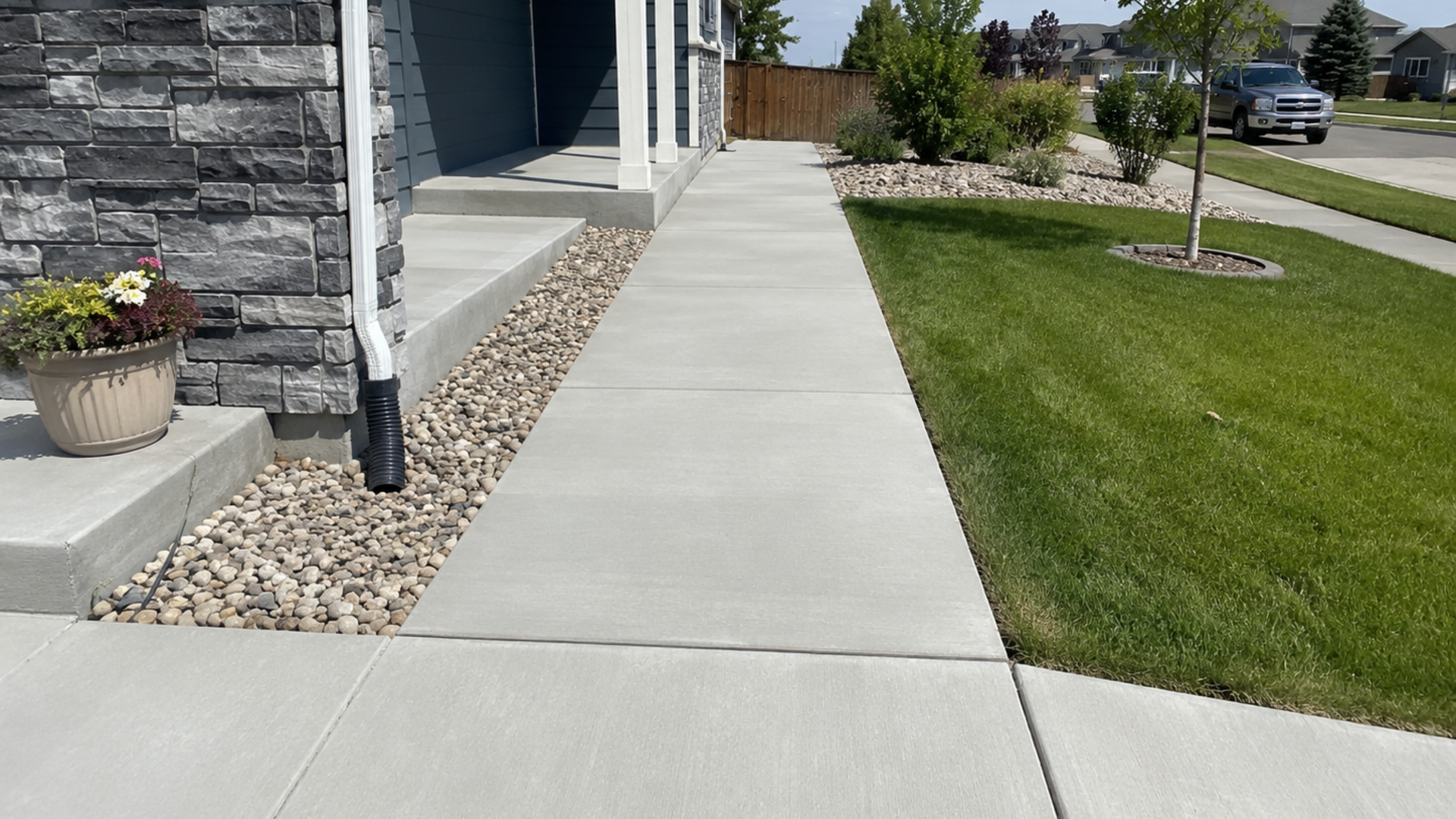
- Foot-traffic pads and walkway-style slabs
- Small equipment pads on stable ground
Vehicle and Heavy Loads at 5 to 6 Inches
Anything holding a vehicle or heavy gear needs more mass and steel. Step up to 5 or 6 inches, with rebar and a stronger mix, for these uses:
- Garage and workshop floors
- RV and vehicle parking pads
- Slabs carrying heavy machinery
Thickness gets set exactly once, on pour day, so build for the heaviest thing the slab will ever hold. The same load logic drives our
recommended concrete driveway thickness for Brighton homes, where vehicle weight pushes the numbers up.
Why the Base Beats Extra Thickness
Here is the part cheap bids quietly skip. A well-compacted gravel base does more to stop cracking than an extra inch of concrete ever will. A four-inch slab on a solid base outlasts a six-inch slab on soft, poorly prepped ground every time. The base disappears under the finished surface, which is exactly why some crews cut it first.
What a Slab Costs Locally
For standard residential work,
a concrete slab runs roughly 6 to 12 dollars per square foot installed, with many jobs sitting near 8 dollars. Small pads cost more per square foot than large ones, because mobilization, forming, and minimum delivery charges stay about the same regardless of size. A tiny shed pad can land well above the per-foot average for that reason alone.
What Pushes Your Number Up
A few variables move a quote within that range and sometimes past it:
- Thickness and reinforcement, since more concrete and rebar cost more
- Site prep, including grading, extra fill, and tearing out an old slab
- Access, since a backyard pour a truck cannot reach adds labor hours
- Finish, with decorative options priced above a standard broom finish
What Belongs in the Bid
A legitimate quote spells out the details so you can compare offers fairly. Look for the dimensions and thickness, the PSI of the mix, the reinforcement type and spacing, the sub-base depth, and the finish. A bid missing those specifics is hiding where it cut, usually the base or the steel.
What to Expect During Installation
A standard slab goes quickly, but the order of operations is what makes it last. A solid crew works through a clear sequence:
- Site evaluation and layout to confirm the footprint and check the ground
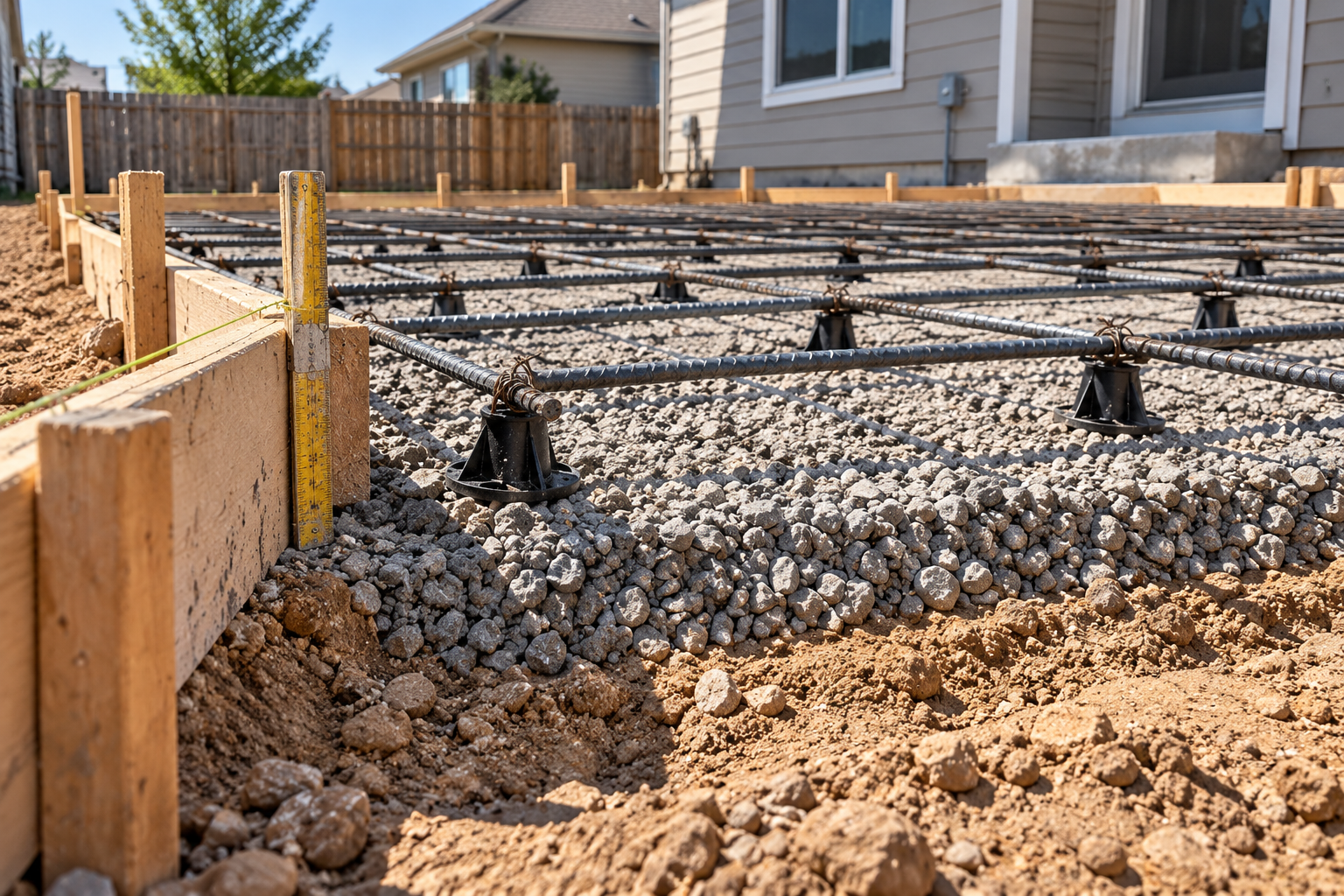
- Excavation and base work, digging to depth and compacting a gravel sub-base
- Forming and reinforcement, setting edges and adding rebar or mesh
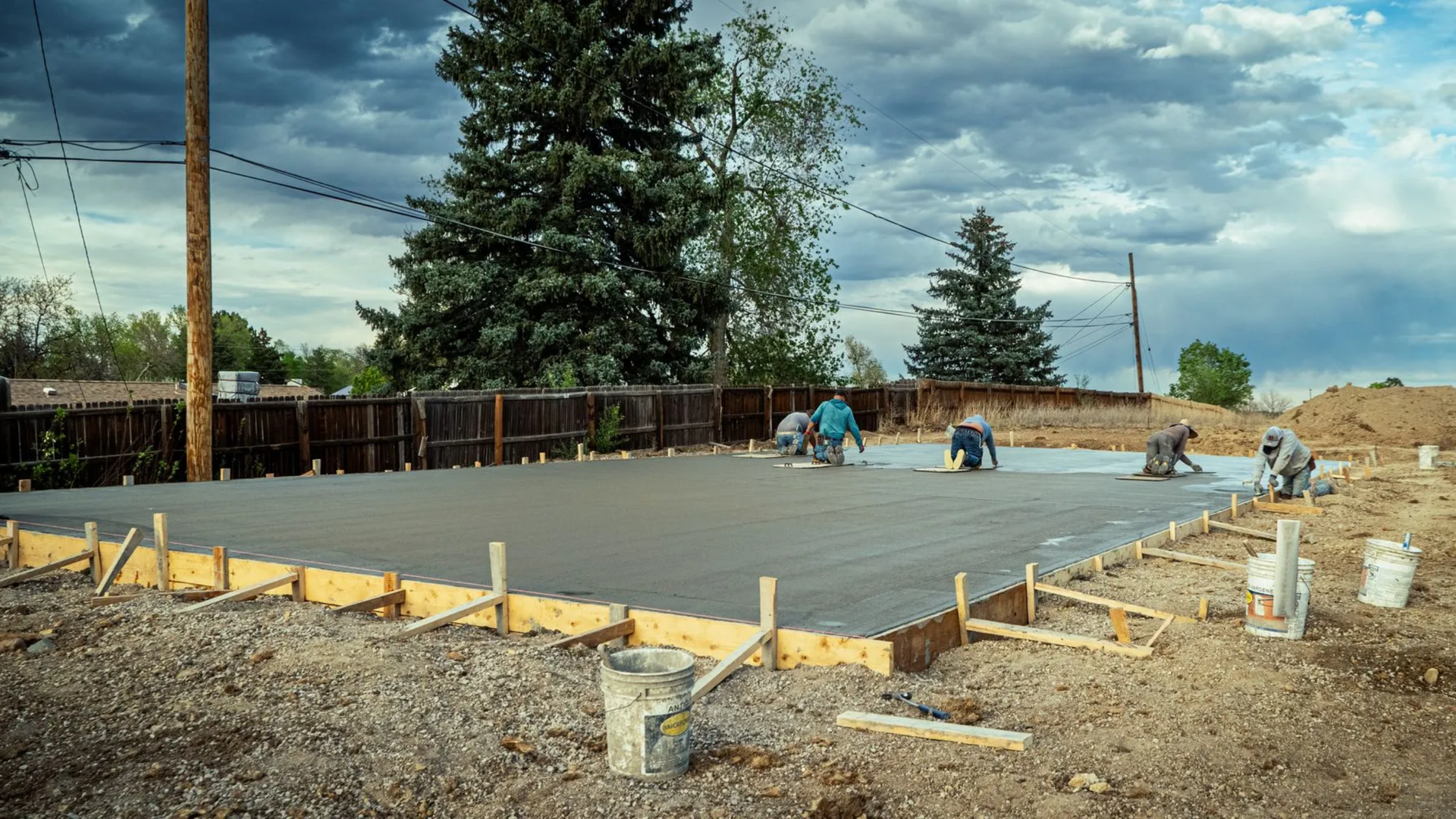
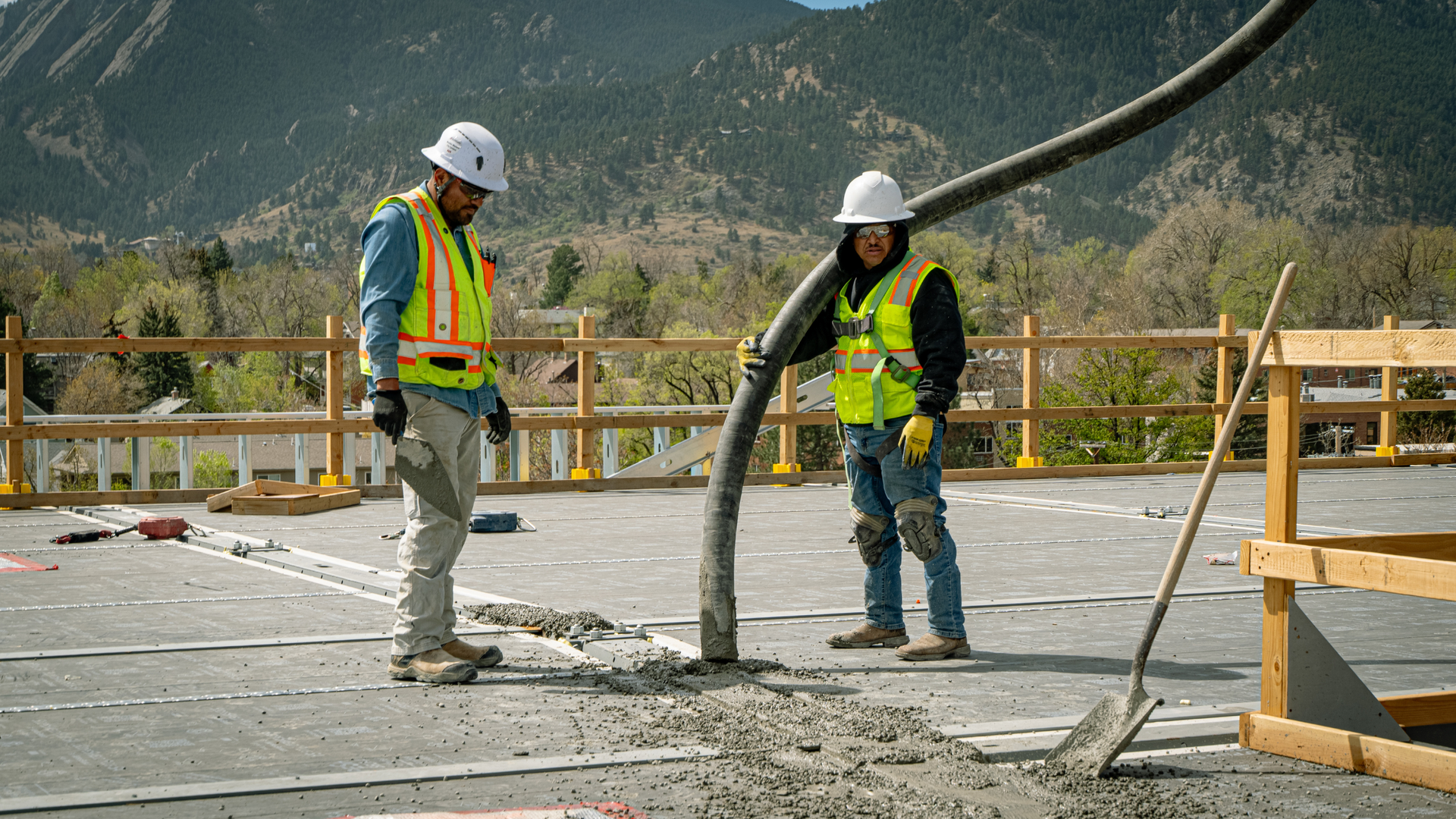
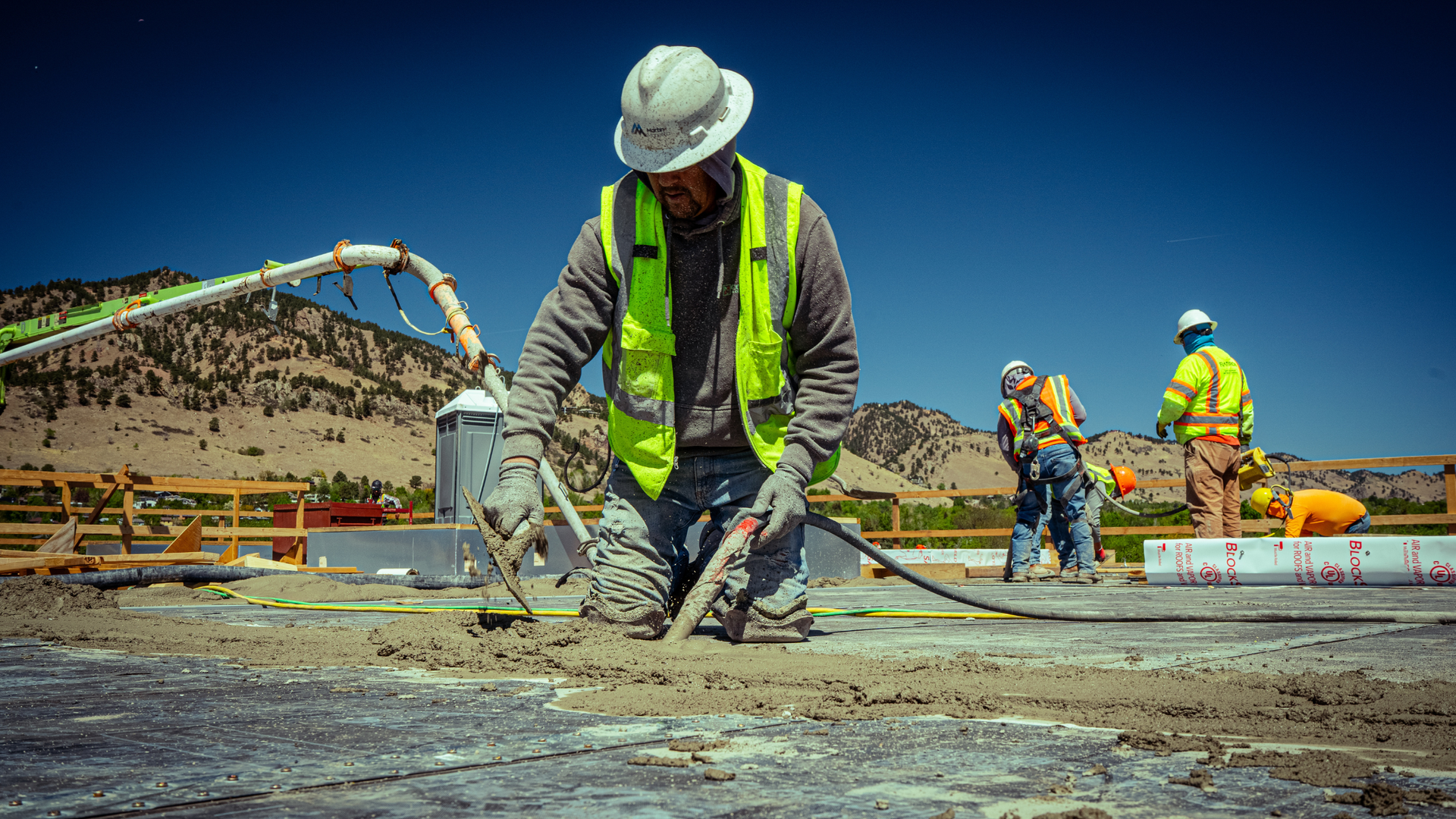
- The pour, placing and leveling the concrete in one continuous effort
- Finishing and curing, applying the finish and letting the slab gain strength
- Cleanup and a final walkthrough of the completed work
Active work on a typical residential slab runs one to two days once the site is ready, followed by curing time before the next phase. You can see that same attention to prep and finish across our
concrete slab installation services.
Permits and Ground Conditions in Brighton
Slab work often needs a permit, especially when it supports a structure like a garage or addition. Permitting and inspections run through the
City of Brighton Building Division, and your contractor should confirm what your project requires before any concrete gets ordered. Handling that up front keeps the job from stalling halfway through.
The ground around here has its own say. Parts of Adams County sit on expansive clay that swells and shrinks as moisture changes, and the local frost line runs deep enough that structural bases must account for it. Those conditions rarely trouble a simple shed pad, but they shape anything structural, which is why choosing the
right concrete foundation for your lot is its own decision. For slab specs and curing standards, the
American Concrete Institute is the reference contractors build to.
Frequently Asked Questions
How long before I can use a new concrete slab?
You can usually walk on a slab after 24 to 48 hours. Wait about 7 days before driving light vehicles on it and roughly 28 days before parking heavy vehicles or setting heavy equipment, since concrete keeps gaining strength over that stretch. Cold weather slows curing, so winter pours need more patience.
Can you pour a new slab over an existing one?
Sometimes, but it is often a mistake. Pouring over a cracked or unstable old slab can transfer those cracks upward, and it raises the surface, which can interfere with doors and drainage. In most cases removing the old slab and starting with a fresh base gives a better, longer-lasting result.
Does a concrete slab need a vapor barrier?
For any slab inside a garage, workshop, or heated building, yes. A vapor barrier under the slab blocks ground moisture from wicking up through the concrete, which protects stored items, flooring, and finishes. An open outdoor pad has more flexibility, though a barrier rarely hurts.
Can a slab be poured in winter in Brighton?
Yes, with cold-weather methods like heated mix water and insulated blankets. The catch is that the process takes longer and needs extra protection until the slab is strong enough to resist freezing. Late spring through early fall stays the easier window locally, so it helps to talk timing with your contractor before booking.
Ready to Pour? Talk to a Local Crew
The right slab starts with matching thickness and prep to how you will actually use it, and that is a short conversation about your project and your site. Guessing at thickness or skimping on the base is where slab problems begin, and both are easy to avoid with a crew that plans the job properly.
ANE Concrete pours garage floors, shed pads, addition bases, and equipment pads across the area, with the base prep and reinforcement that make a slab last for decades. If you want a straight, itemized quote on your project, reach out and we will walk your site, talk through what it needs, and lay out a clear path to a solid slab.
REQUEST A FREE ESTIMATE
CALL US NOW