Concrete Walkways and Sidewalks in Brighton: Cost, Design and Permits
A new front entry path or garden walkway does two things at once. It boosts curb appeal, and it gives you a durable, slip-resistant surface that holds up to Colorado winters. If you are pricing one out, the first question is almost always the same: what does a concrete walkway cost in Brighton, and what am I actually paying for?
This guide answers that in plain numbers, then walks through the design choices, the thickness and width standards that keep a walkway from cracking, and the one permit rule that trips people up. By the end you will know enough to read a contractor's quote and tell a fair bid from a lowball.
What a Concrete Walkway Costs in Brighton
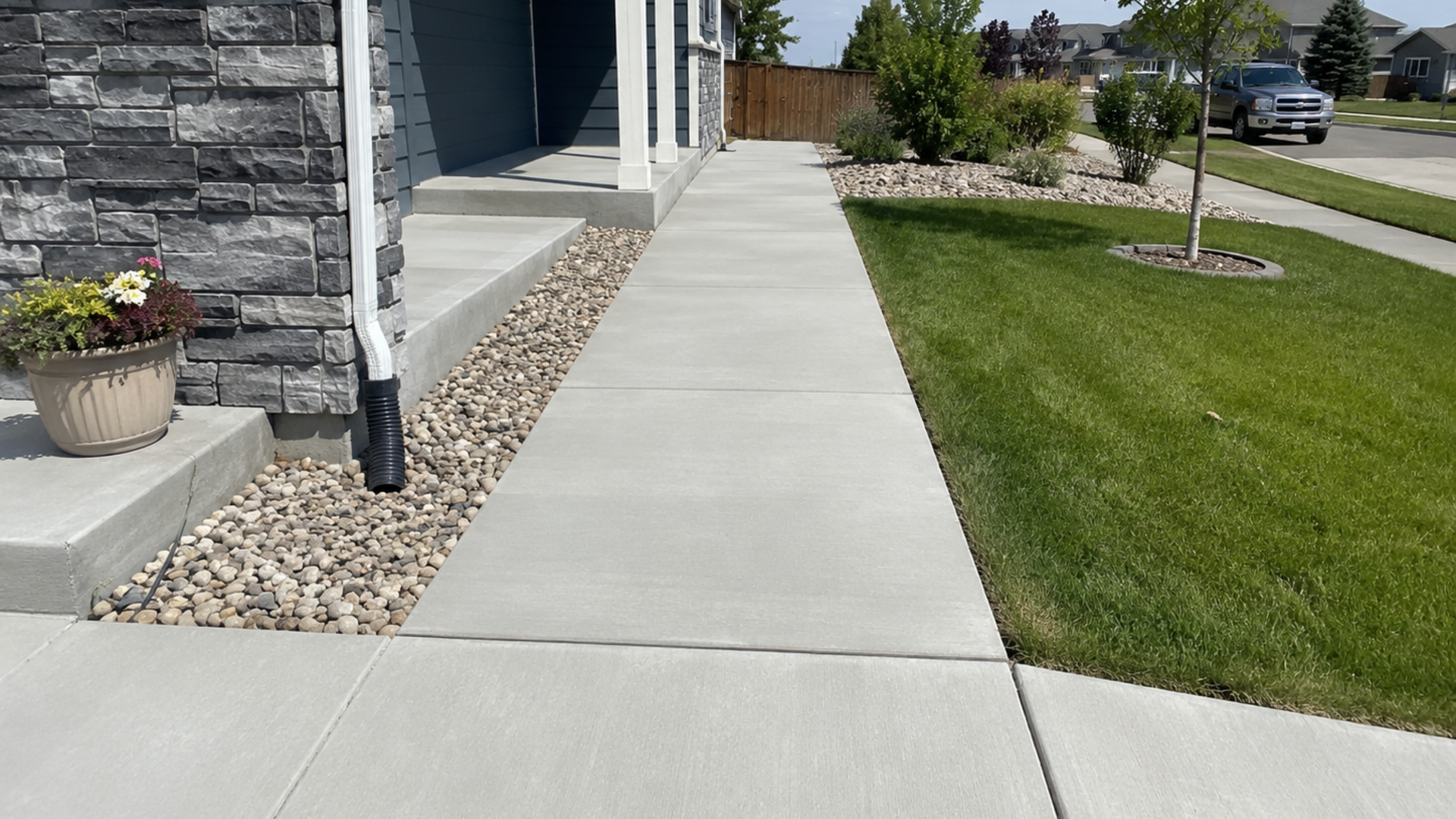
In Brighton, a simple concrete walkway generally runs between $8 and $20 per square metre for materials and installation. The total price ultimately depends on your choice of finish—such as standard brushed versus decorative aggregate—and how much ground excavation or slope leveling your garden requires.
Cost per Square Foot and per Linear Foot
For a standard broom-finish walkway, current 2026 pricing lands in a fairly consistent band:
- Standard broom finish: about 8 to 15 dollars per square foot installed
- Per linear foot: roughly 30 to 55 dollars for a typical 4-foot-wide path
- Decorative and stamped finishes: about 12 to 22 dollars per square foot
- Removal and replacement of an old walkway: about 10 to 25 dollars per square foot, since demolition and haul-away stack on top of the new pour
Those numbers include the full job: site prep, a compacted gravel base, the concrete itself, reinforcement, forming, finishing, and cleanup. A quote that comes in far below this range is usually leaving something out, and it is often the base prep, which is the last place you want a contractor to cut.
What a Typical Project Adds Up To
Square footage is what turns a per-foot rate into a real budget. Here is how common walkway sizes shake out at standard finish:
- A short front walk, around 75 square feet: roughly 600 to 1,200 dollars
- A typical 100-square-foot path: roughly 800 to 1,500 dollars
- A standard 200-square-foot walkway, about 50 feet at 4 feet wide: roughly 1,600 to 3,200 dollars
- A longer 400-square-foot run: roughly 3,200 to 6,000 dollars
Most homeowners installing a single front or side walkway end up somewhere in the 1,600 to 3,200 dollar range. Small standalone jobs cost more per square foot than large ones, because a crew still has to mobilize, form, and finish even a short path, and concrete delivery carries minimum fees.
| Walkway Size | Approximate Dimensions | Typical Installed Cost |
|---|---|---|
| 75 square feet | Short front walk | 600 to 1,200 dollars |
| 100 square feet | Standard path | 800 to 1,500 dollars |
| 200 square feet | 50 ft by 4 ft wide | 1,600 to 3,200 dollars |
| 400 square feet | Long or multi-run | 3,200 to 6,000 dollars |
What Drives the Price Up or Down
Two walkways of the same length can be quoted hundreds of dollars apart. Here is what moves the number.
Size and Shape
A straight, rectangular run is the cheapest thing to form and pour. Curves, switchbacks, and rounded edges take more forming time and generate more waste, so a winding garden path costs more per square foot than a straight shot from the driveway to the door.
Finish and Design
This is the single biggest lever you control. A plain broom finish is the baseline. Every step up in decorative work, color, exposed aggregate, stamping, adds labor and skill, and the price climbs with it.
Site Prep and Access
What is already on the ground matters. Costs rise when the crew has to:
- Demolish and remove an old path or slab
- Excavate and regrade uneven or sloped ground
- Import extra base material for poor or clay-heavy soil
- Work in a tight backyard where a wheelbarrow, not a truck chute, moves every load of concrete
Access is easy to overlook. A backyard walkway a crew can only reach through a narrow gate is more labor than the same walkway beside an open driveway.
Removal and Replacement
If you are replacing an existing walkway rather than pouring a new one on bare ground, budget more. Tearing out old concrete and hauling it off typically adds several dollars per square foot before the new pour even starts.
Design Options That Change the Look and the Price
Concrete is far from boring anymore. The finish you choose sets both the look and a big part of the cost.
Broom Finish
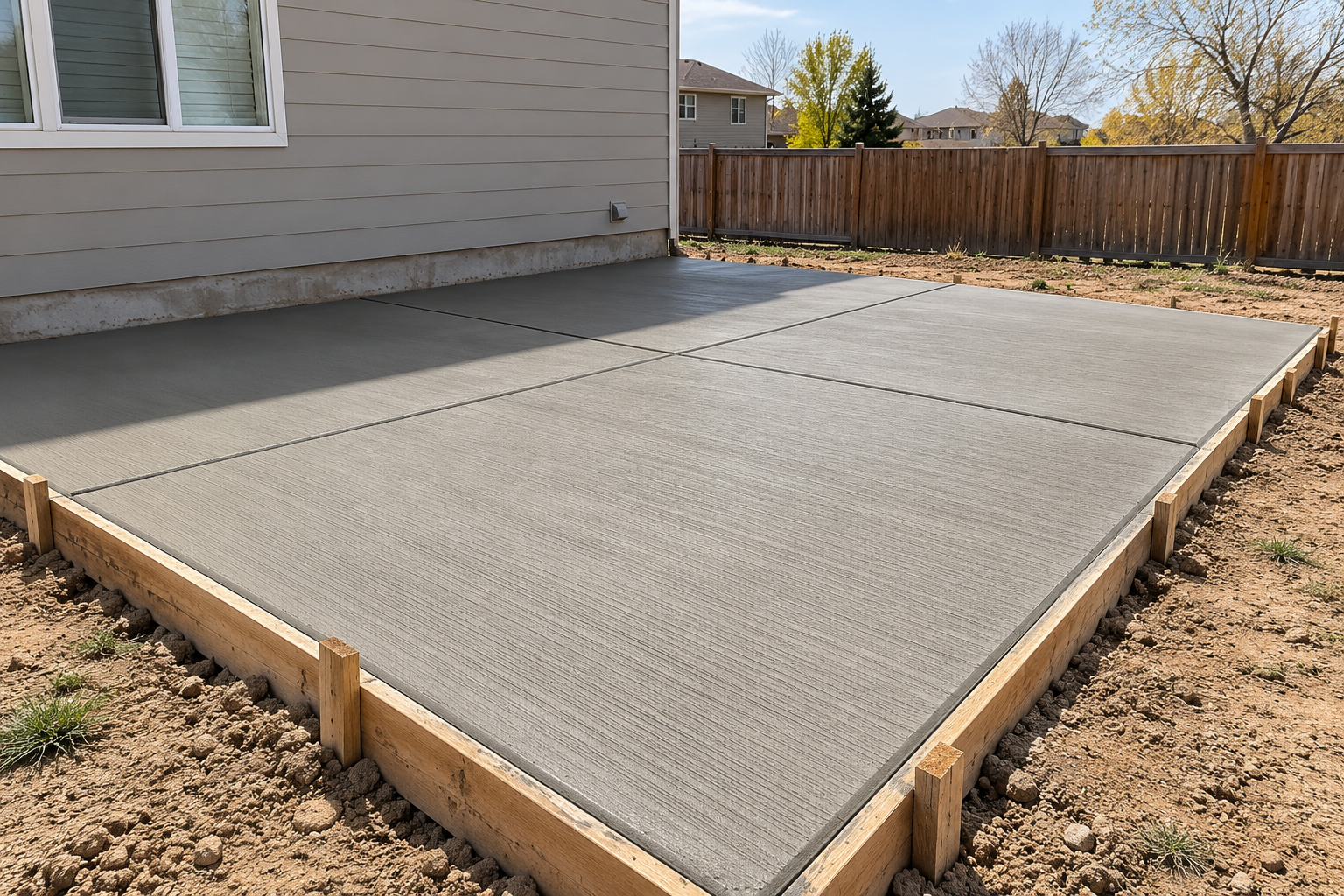
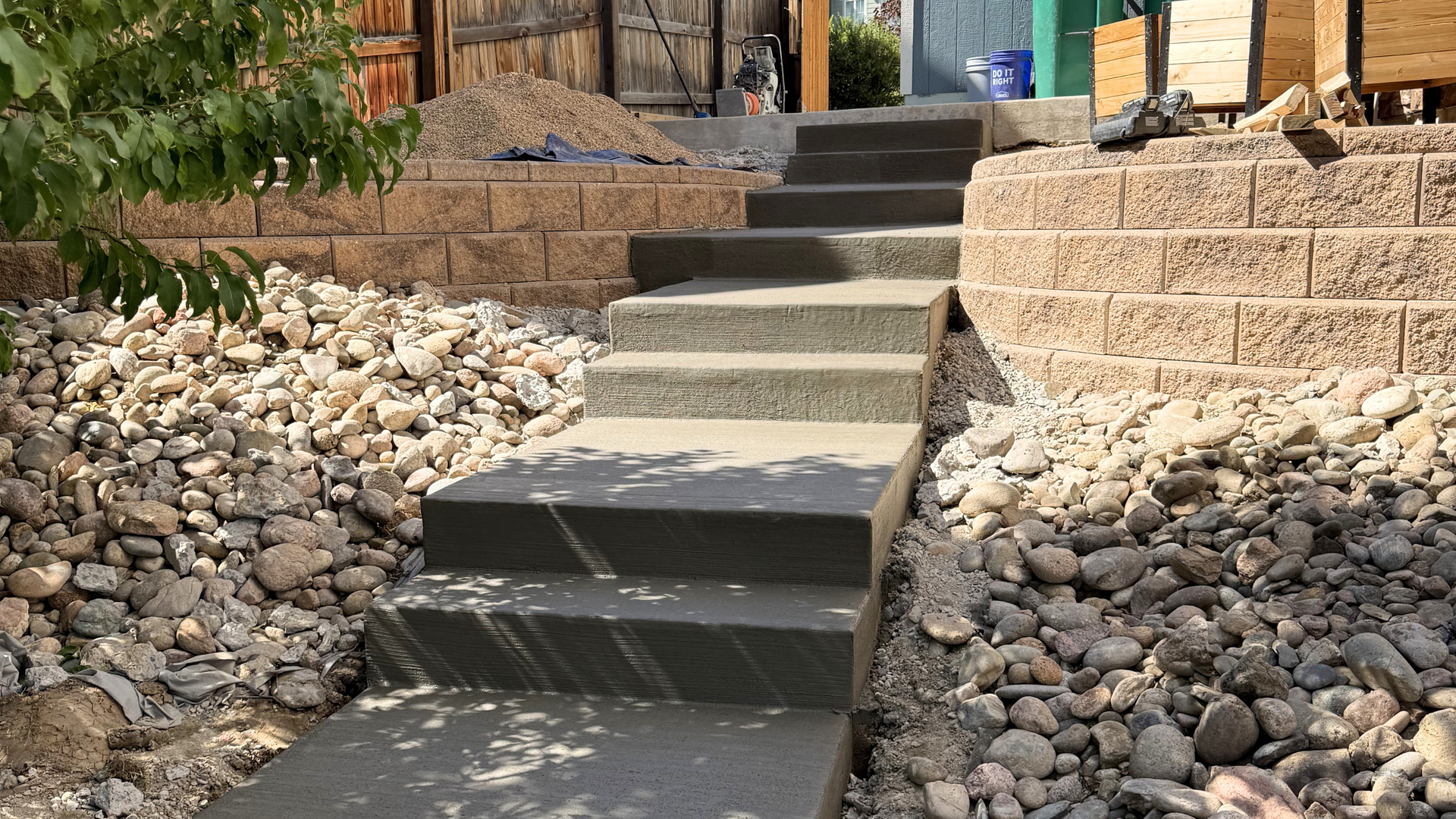
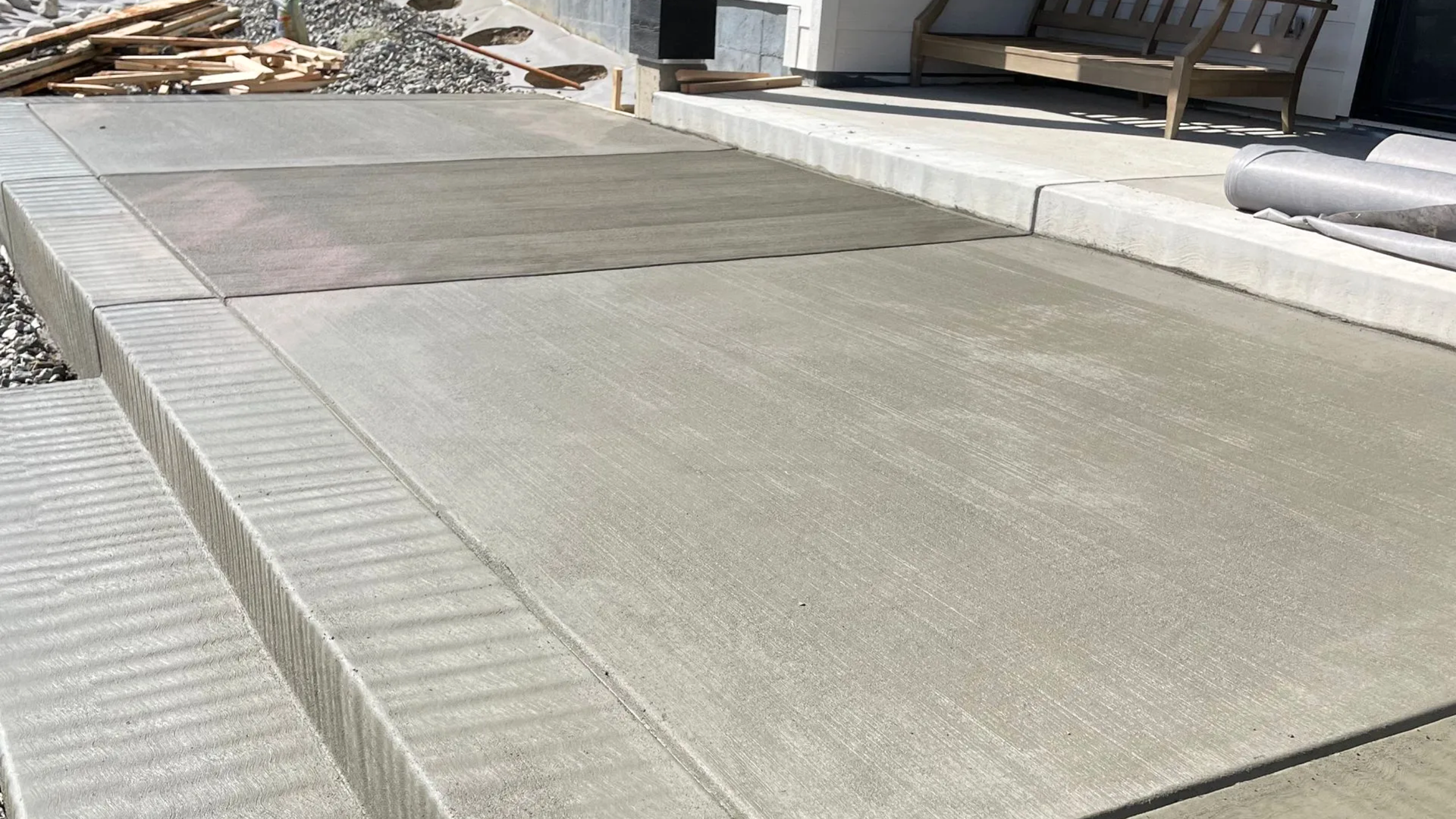
The workhorse. A broom finish drags a fine texture across the surface for slip resistance, which matters on a Colorado walkway that sees snow and ice. It is the most affordable option, it is low maintenance, and it suits almost any home. If budget is the priority, this is your finish.
Exposed Aggregate
This finish washes away the top layer of cement paste to reveal the stone in the mix, giving a pebbled, decorative surface with excellent traction. It sits in the middle of the price range and hides wear and minor staining well, which makes it a popular front-walk choice.
Stamped and Colored Concrete
The premium look. Stamped concrete presses patterns into the surface to mimic brick, flagstone, or natural stone, and color can be mixed in or applied on top. It is the most expensive finish because it takes more forming, more labor, and a finisher who knows the craft, but the result rivals far pricier pavers for a fraction of the maintenance. If you want a decorative path that ties into a patio or entry, this is worth exploring, and it is the same craft used on a stamped concrete driveway or patio.
| Finish | Cost per Square Foot | Best For |
|---|---|---|
| Standard broom finish | 8 to 15 dollars | Budget, everyday walkways |
| Exposed aggregate | 10 to 18 dollars | Traction and a decorative look that hides wear |
| Stamped or colored | 12 to 22 dollars | Premium curb appeal, patio and entry matching |
| Removal and replacement | 10 to 25 dollars | Replacing a failed or cracked existing walkway |
How Thick and How Wide Should a Walkway Be?
The specs below are where a quality install separates itself from a cheap one. They also answer a question homeowners ask constantly: how thick is a sidewalk supposed to be?
Thickness
- Standard residential walkways and sidewalks: 4 inches thick, poured at around 3,000 PSI
- Anywhere vehicles will cross, such as a driveway apron or a path a car occasionally rolls over: 5 to 6 inches thick
- Below the slab: a compacted gravel base, typically around 4 inches, which is what actually prevents settling and cracking
Here is the part cheap bids skip. The base matters as much as the slab. In Brighton's freeze-thaw climate, a 4-inch slab on a properly compacted base outlasts a thicker slab poured on bare, unprepared dirt every single time.
Width
- 3 feet: fits one person comfortably, fine for a utility or garden path
- 4 feet: lets two people walk side by side, the common front-entry standard
- 36 inches: the minimum clear width used as an accessibility baseline
- 5 feet: preferred where the path needs room for two people, or two mobility devices, to pass
Most residential front walks land at 3 to 4 feet wide. Wider reads as more welcoming and costs more concrete, so it is a curb-appeal-versus-budget call.
Joints and Drainage
Two details that quietly determine whether your walkway ages well:
- Control joints: cut at intervals of about 2 to 3 times the width, so a 4-foot walk gets a joint every 8 to 12 feet. These give inevitable shrinkage cracks a clean line to follow instead of wandering across the surface.
- Cross slope: a slight pitch, around 2 percent, so water sheds off the walkway instead of pooling and freezing on it.
Neither is glamorous, but skip them and you get random cracking and icy puddles. A good crew treats both as standard, not extras.
| Spec | Recommendation |
|---|---|
| Standard thickness | 4 inches at about 3,000 PSI |
| Vehicle-crossing thickness | 5 to 6 inches |
| Gravel base | About 4 inches, compacted |
| Minimum clear width | 36 inches |
| Comfortable two-person width | 4 to 5 feet |
| Control joint spacing | Every 2 to 3 times the width (8 to 12 ft on a 4 ft walk) |
| Cross slope for drainage | About 2 percent |
Do You Need a Permit for a Walkway in Brighton?
Short answer: it depends entirely on where the walkway sits.
- A private walkway on your own property, a garden path, a front walk that stops behind the public sidewalk, usually needs no building permit.
- The moment the work touches the public right-of-way, the public sidewalk, or a driveway crossing where your path meets the street, a City permit and a certificate of grade come into play.
That distinction is the whole ballgame, and it catches people off guard because the public sidewalk in front of a house sits in the right-of-way even though it feels like part of the yard. We break the rule down in full in our guide on whether you need a permit for concrete work in Brighton. If your walkway stays on private ground, you are almost always clear. If it ties into the public sidewalk, get the permit sorted first.

How to Compare Walkway Quotes
When you have two or three bids in hand, the lowest number is not automatically the best deal. Read for what is actually included:
- Base prep: does the quote spell out excavation and a compacted gravel base, or is it vague?
- Thickness and PSI: 4 inches at 3,000 PSI for a standard walk, more where vehicles cross
- Reinforcement: fiber mix or wire mesh should be stated
- Control joints: mentioned and spaced correctly
- Finish: broom, aggregate, or stamped, spelled out so you are comparing like for like
- Permit responsibility: who pulls it if the work touches the right-of-way
- Cleanup and haul-away: included or extra
A bid that is thorough on these is usually the one that produces a walkway still looking good in 25 years. You can see how these fundamentals play out from start to finish in our concrete driveway installation process guide, which covers the same base-prep and jointing principles that make flatwork last.
Frequently Asked Questions
How much does a concrete walkway cost in Brighton, CO?
A standard broom-finish concrete walkway in Brighton generally runs about 8 to 15 dollars per square foot installed, which works out to roughly 30 to 55 dollars per linear foot for a typical 4-foot-wide path. Most residential walkway projects land between 1,600 and 3,200 dollars. Decorative finishes and difficult site conditions push the number higher, so the only way to get an exact figure is a site visit.
How thick should a concrete sidewalk be?
A standard residential sidewalk or walkway is 4 inches thick, poured at around 3,000 PSI over a compacted gravel base. Where the walkway will be crossed by vehicles, such as at a driveway apron, the thickness should step up to 5 or 6 inches. Proper base prep matters as much as thickness for preventing cracks in a freeze-thaw climate.
How wide should a residential walkway be?
Most residential walkways are 3 to 4 feet wide. A 3-foot path fits one person comfortably, while 4 feet lets two people walk side by side and is a common front-entry choice. Public sidewalks and anything meant to be accessible generally aim for a minimum clear width of 36 inches, with 5 feet preferred where two wheelchairs may need to pass.
Does a stamped concrete walkway cost more?
Yes. A plain broom finish is the most affordable option. Exposed aggregate sits in the middle, and stamped or colored concrete is the most expensive because it takes more forming, more labor, and more finishing skill. Stamped walkways commonly run 12 to 22 dollars per square foot installed, versus 8 to 15 dollars for a standard broom finish.
Do I need a permit to install a walkway in Brighton?
A private walkway on your own property, such as a garden path or a front walk that stays behind the public sidewalk, usually does not require a building permit. The moment the work touches the public right-of-way, including the public sidewalk or a driveway crossing, a City permit and a certificate of grade come into play. Confirm before you pour.
How long does a concrete walkway last?
A properly installed concrete walkway lasts 25 to 30 years or more in the Brighton climate. Longevity comes down to base preparation, correct thickness, control joints placed at the right intervals, and sealing every few years to resist freeze-thaw damage. Cutting corners on the base is the most common reason a walkway fails early.
Get a Straight Answer on Your Walkway
Pricing a walkway from a web page only gets you so far. The real number depends on your ground, your layout, the finish you want, and whether the work touches the right-of-way. That is a short site visit, not a guess.
As a local Brighton concrete contractor, ANE Concrete installs sidewalks and walkways, patios, and driveways across the city, and we quote walkways honestly, base prep and all, so the number you get is the number that builds a path lasting decades. We will tell you which finish fits your budget, what thickness your project needs, and whether the City has to be involved.
If you are ready for a real figure on your walkway or sidewalk, request a free estimate. We will walk your site, talk through design, and give you a clear, itemized quote with no guesswork.