The Quick Answer
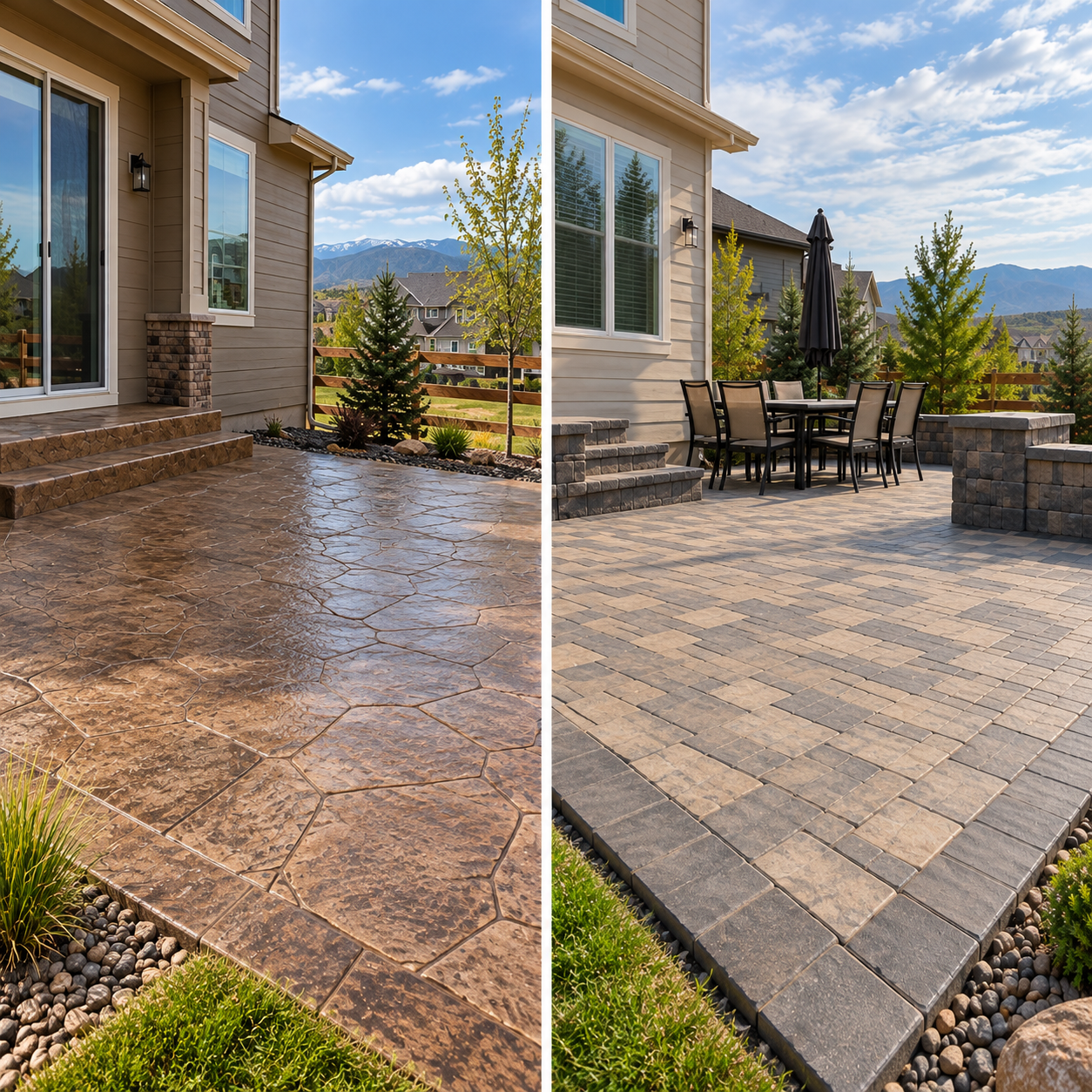
There is no universal winner, and any contractor who says otherwise is selling. Stamped concrete usually costs less and gives you a seamless, custom look that clears snow easily. Pavers cost more up front but flex with ground movement and let you swap a damaged unit without a visible patch.
Your lot, your budget, and how much maintenance you want to do should drive the call. The sections below break down the trade-offs that matter most locally.
Cost Compared
Pricing overlaps more than people expect, so neither option is automatically the budget pick. A simple single-color stamped design on a large area can come in under a paver job, while an elaborate stamped pattern can cost more than basic pavers. Colorado projects often run toward the higher end of national ranges because of our soil prep and freeze-thaw requirements.
What Moves Stamped Concrete Pricing
The design does most of the work on a stamped quote. A single color with one pattern sits at the low end, while multiple colors, custom borders, and intricate stone textures push toward the top. Larger pours also spread fixed costs, so price per square foot tends to drop as the area grows.
What Moves Paver Pricing
Material choice is the big lever for pavers. Standard concrete pavers are the most affordable, brick runs a bit higher, and natural stone sits at the top of the range. Labor matters too, since every unit is placed by hand, so an intricate layout or a lot of cutting around curves adds hours.
STILL DECIDING ON YOUR PATIO? LET'S TALK.
How Each Handles Front Range Freeze-Thaw
This is where our climate earns its own section. Water that seeps in, freezes, expands, and thaws is the single biggest threat to any outdoor surface in the area, and the two options deal with it in opposite ways.
Stamped Concrete: One Rigid Slab
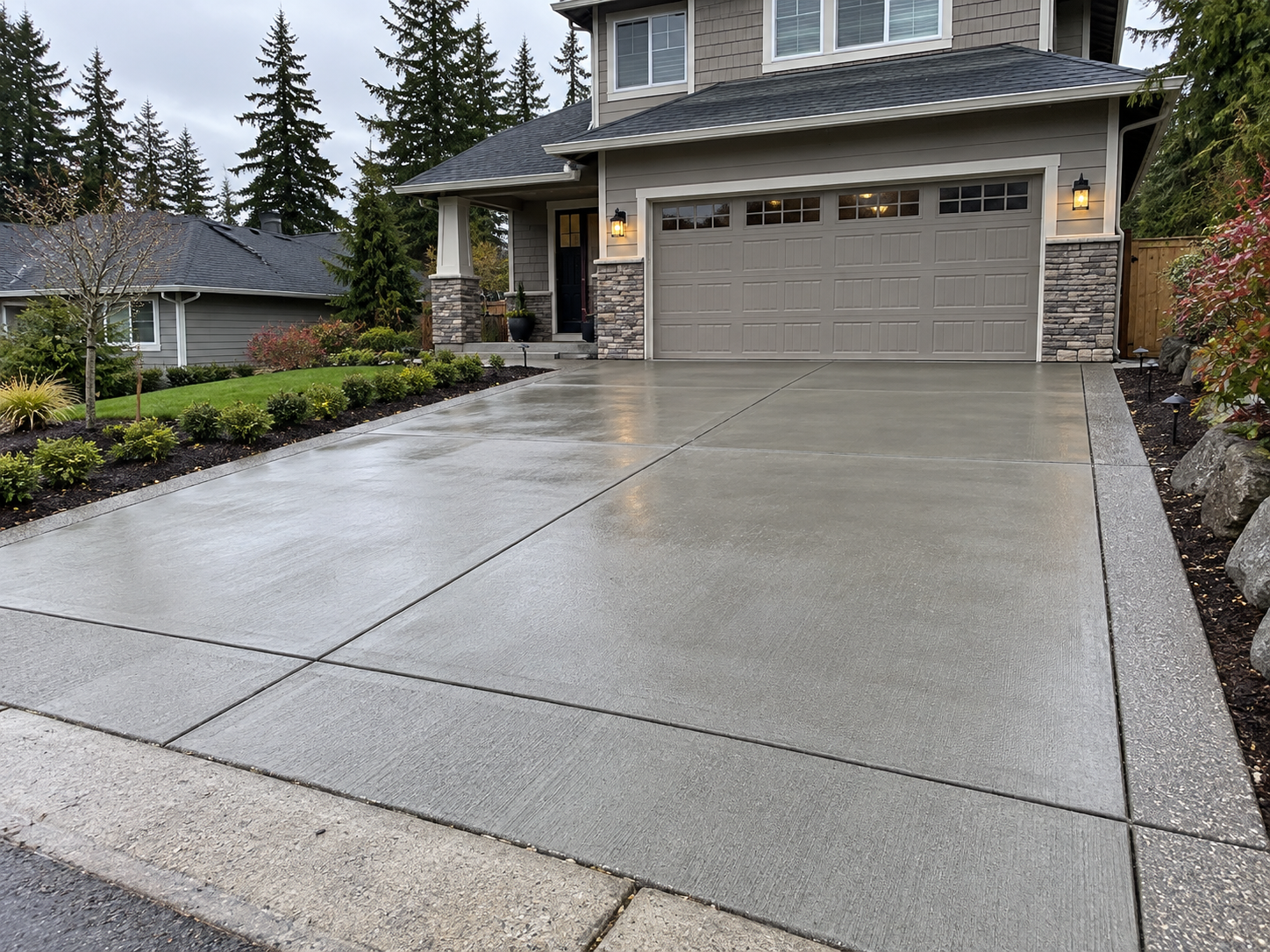
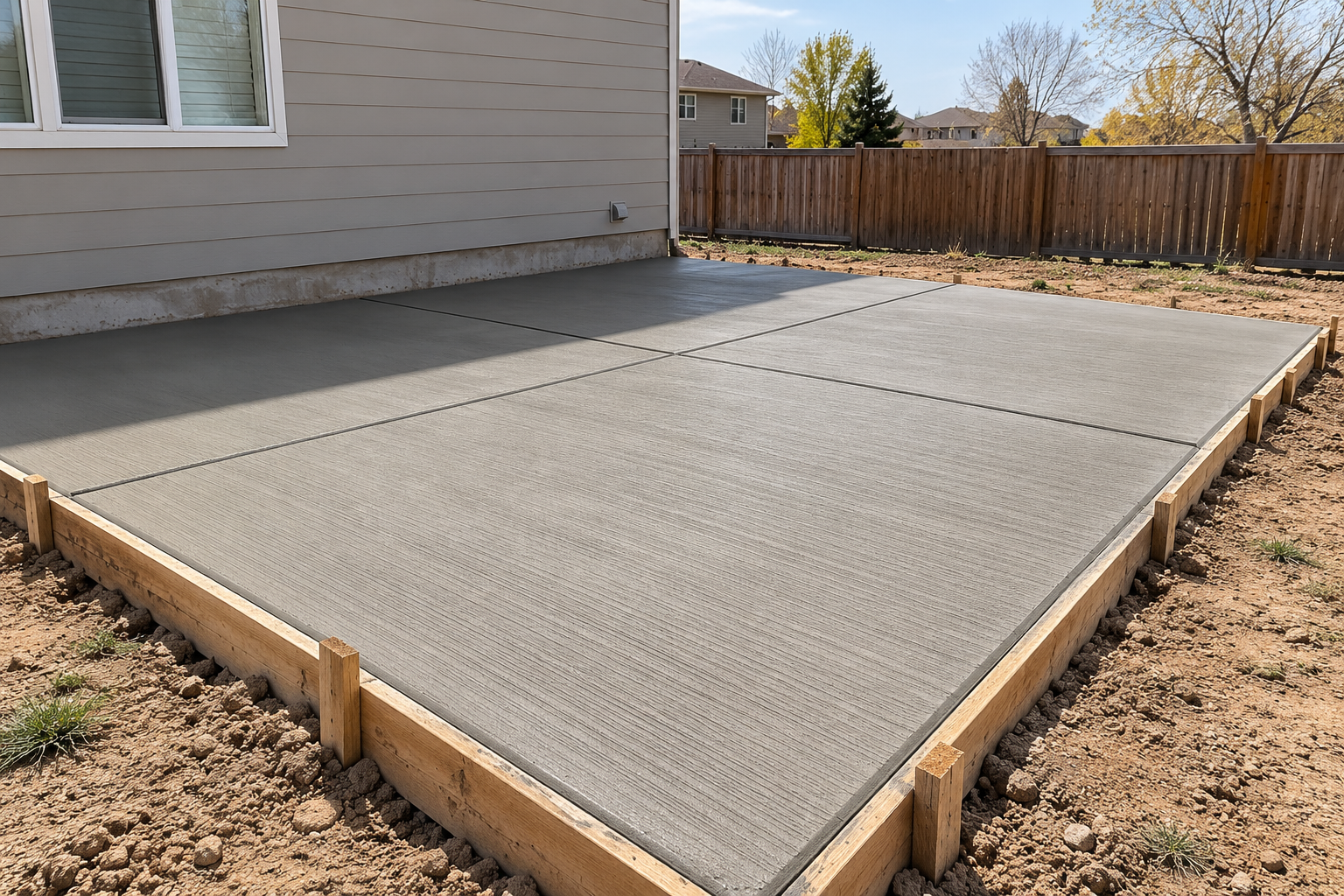
Stamped concrete is a single rigid slab, so it has to resist cracking rather than move with the ground. Built right, it does this well, using an air-entrained mix around 4,000 PSI, fiber or rebar reinforcement, control joints cut the same day, and a properly compacted base. The air-entrainment matters most, since those microscopic bubbles give freezing water room to expand. You can read how the
American Concrete Institute defines those durability specs for cold climates. Cut corners on the mix or the base, though, and surface scaling or cracking can show up after a hard winter or two.
Pavers: Many Units That Flex
Pavers take the opposite approach. Instead of resisting movement, the many small units shift slightly and settle back as the ground heaves and relaxes. Their sand-filled joints also drain water down and away rather than trapping it at the surface. Manufactured to the ASTM C936 standard, quality pavers reach around 8,000 PSI, denser and less absorbent than typical poured concrete. On lots with the expansive clay common across the region, that flexibility is a real advantage, and the
Colorado Geological Survey maps where that soil movement is most pronounced.
Upkeep Over the Years
Both surfaces need attention, just different kinds. Neither is truly maintenance-free, and knowing the rhythm up front helps you pick the one that fits how you like to spend weekends.
Sealing and Snow on Stamped Concrete
Stamped concrete gets its first seal a few weeks after the pour, then a reseal every two to three years to protect the color and the surface. The upside in winter is the seamless surface, which a shovel or snowblower glides across without catching. The seal is the real commitment here, and skipping it lets color fade and moisture work in.
Sand, Weeds, and Resetting on Pavers
Pavers trade sealing for joint care. The sand between units washes out over time and needs topping up every few years, with polymeric sand lasting longer than plain sand. Weeds can sprout in the joints, and a unit or two may settle and need resetting. Snow removal also takes a lighter touch, since shovels and blowers can catch raised edges and scatter joint sand.
Repairs: What Happens When Something Cracks or Shifts
Repairs are where the two surfaces differ most, and it is worth picturing the worst case before you buy. With stamped concrete, small cracks are inexpensive to fill, but the patch rarely matches the pattern, and larger damage may mean sawcutting a whole section to keep the design continuous. The fix works, yet it tends to show.
Pavers handle damage more gracefully. A cracked, stained, or sunken unit lifts out, the sand bed gets re-leveled, and a replacement drops in, often in under an hour. If you saved a few spare units from the original job, the repair is nearly invisible, which is a quiet advantage on ground that moves.
So Which Should You Choose?
Lean toward stamped concrete
if you want a seamless custom look, easier snow clearing, and a lower starting price, and you are comfortable resealing every couple of years. It shines on stable, well-drained lots where a rigid slab can stay put. For a deeper look at patterns and pricing, see our guide to
stamped concrete cost and design options.
Lean toward pavers if your yard has slope or known soil movement, you want the longest lifespan, and near-invisible repairs matter to you. They cost more up front and ask for joint upkeep, but they forgive ground movement in a way a slab cannot. Whichever way you lean, the quality of the base prep decides how long the surface lasts, so it belongs in any conversation with a contractor who knows local ground. If stamped is your direction, our
stamped concrete installation and
concrete patio options are a good place to start.
Frequently Asked Questions
Do stamped concrete and pavers add value at resale?
Outdoor hardscape projects tend to recover roughly 60 to 80 percent of their installed cost at resale, according to National Association of Realtors remodeling data. Well-kept pavers often land near the top of that range because they still look new after years. Freshly sealed stamped concrete shows strong curb appeal too, though faded or patched stamped work can read as deferred maintenance to a buyer.
Can you put stamped concrete or pavers over an existing patio?
It depends on the condition of what is already there. Pavers can sometimes be set over a sound existing slab with the right base, while stamped concrete is usually a fresh pour on prepared ground. A cracked or heaving base needs to be addressed first either way, so a site look is the honest starting point.
Is salt safe to use on either surface in winter?
Go easy on deicers on both. Rock salt and magnesium chloride accelerate surface scaling on concrete and can wash sand out of paver joints. Sand for traction and a plastic shovel are gentler choices, and clearing snow promptly reduces the need for chemicals at all.
Which surface is better for a sloped or uneven yard?
Pavers tend to have the edge on tricky ground because individual units can follow grade changes and be reset if the soil shifts. Stamped concrete can work on slopes with proper forming and drainage, but significant movement is harder to correct once it is poured. Your contractor should assess the grade before recommending either.
Thinking Stamped? Let's Talk It Through
The best way to settle the stamped-versus-pavers question is on your actual lot, with your budget and your soil in front of you. A good contractor talks through the trade-offs honestly, even the cases where another surface might suit you better.
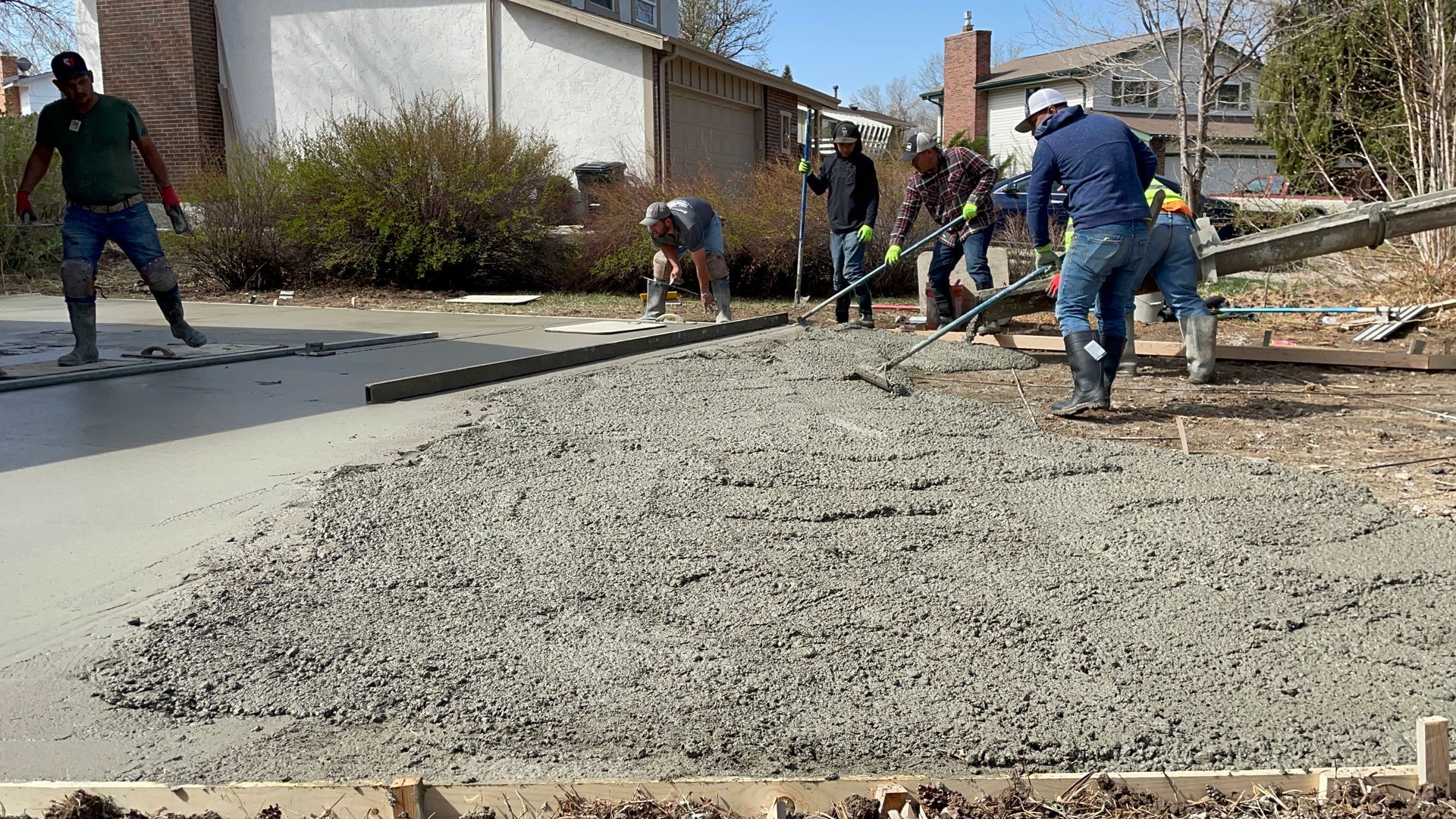
ANE Concrete specializes in stamped concrete for homeowners across Brighton and the surrounding area, with the air-entrained mix, proper jointing, and base prep that help a stamped surface stand up to our winters. If stamped concrete is on your shortlist, reach out for an estimate, and we will give you a straight read on whether it fits your yard, your climate, and the look you want.
REQUEST A FREE ESTIMATE
CALL US NOW